My Projects
Custom Autonomous Electric Vehicle
I used Jetson Nano running Linux and ROS to control the AEV, integrating LiDAR, IMU, and VESC for real-time sensing and motor control; joystick input enabled manual driving through ROS topics.
I developed a wall-following controller using feedback linearization to maintain center alignment between hallway walls; speed dynamically adjusted based on obstacle proximity.
I designed a navigation algorithm in Python to find the largest gap in front of the AEV and applied a quadratic program to create virtual barrier zones for safe path planning.
Used Python for self-driving algorithm that navigated around static obstacles using real-time adjustments to turning radius and velocity based on stop/safe distance parameters.

Embedded Spatial Measurement System
I designed and built an embedded spatial measurement system using a time-of-flight lidar sensor and a microcontroller to acquire information about the area around the user.
Integrated fixed distance samples along the orthogonal axis using a rotary mechanism to provide a 360 degree measurement of distance within a single vertical geometric plane.
Mapped spatial information is stored in onboard memory and later communicated to a personal computer or web application for reconstruction and graphical presentation.
I used C and assembly code to control the stepper motor and Python for visualization; I2C and UART are the communication protocols used

Silicon Photonics Research
I worked at the Bradley Research Group, an engineering physics lab at McMaster University.
I executed a research project in silicon photonics, testing silicon chips that use light as energy instead of electricity.
I built a setup for finding rare-earth dopant cross sections using spectroscopy.
I developed a system whereby White Light Laser (WLL) sends light through a PCF to be collimated then focused into a Single Mode Fiber (SMF) or Multimode Fiber (MMF).
I wrote a literature review on how to calculate the emission cross section from measured absorbance data.
I assisted graduate students in the lab with their projects and advised the Principal Investigator on which equipment the lab should purchase to enhance work on future projects.
I utilized lab equipment such as OSA, metricon, spectrometer, white light laser, and other advanced machinery.
I created a poster showcasing my research for the McMaster Society for Engineering Research 2022 Poster Showcase, which can be seen on the right.


MOSFET-Based XOR Gate
I designed a CMOS XOR gate using NMOS and PMOS transistors, optimizing transistor sizes with LTSpice to ensure stable performance.
I constructed a hardware prototype on the Analog Discovery 2 kit, leveraging digital I/O pins to validate circuit functionality.
I conducted functional testing and timing analysis with oscilloscopes, measuring voltage levels, rise/fall
times, and propagation delays to confirm performance criteria.I explored pass-transistor logic (PTL) as an alternative design, analyzing its voltage and timing behavior compared to the traditional CMOS approach.
MTI Radar Signal Processor
Developed real-time signal processing algorithms in C targeting a TMS320 DSP processor to process raw radar data.
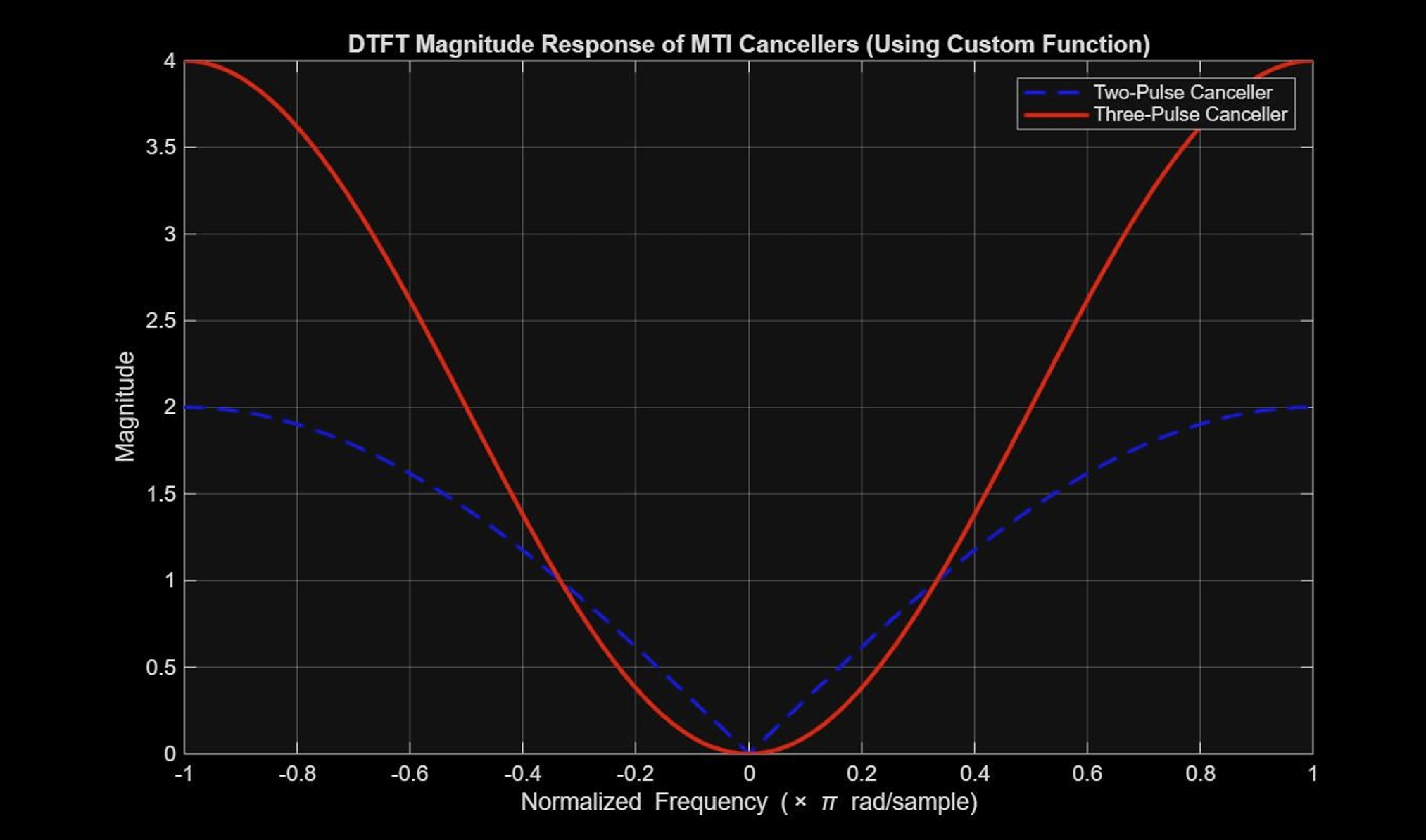
Implemented and validated both two-pulse and three-pulse Moving Target Indicator (MTI) filters, successfully suppressing stationary clutter to isolate moving targets in high-noise environments.
Conducted rigorous hardware validation using oscilloscope measurements, comparing filtered real-time outputs against raw radar sweeps to verify zero-Doppler component suppression.
Optimized signal fidelity by refining DSP routines and implementing a Hanning windowing routine, correlating frequency domain analysis to analyze signal attenuation and noise amplification tradeoffs.
Exam Season Planner
I worked in a team at the DeltaHacks9 Hackathon to design a scheduling tool for exam seasons using HTML, Python, Flask, and JavaScript.
How to use:
First set the time you want your day to start and end, the tasks will only be included inside this time period.
Add the task name and the amount of time it will approximately take (hours).
Click submit to add this task to the list of all tasks.
After all of the tasks are submitted, click plan day, and this tool will make the optimal schedule for you.
High-Linearity Signal Amplifier
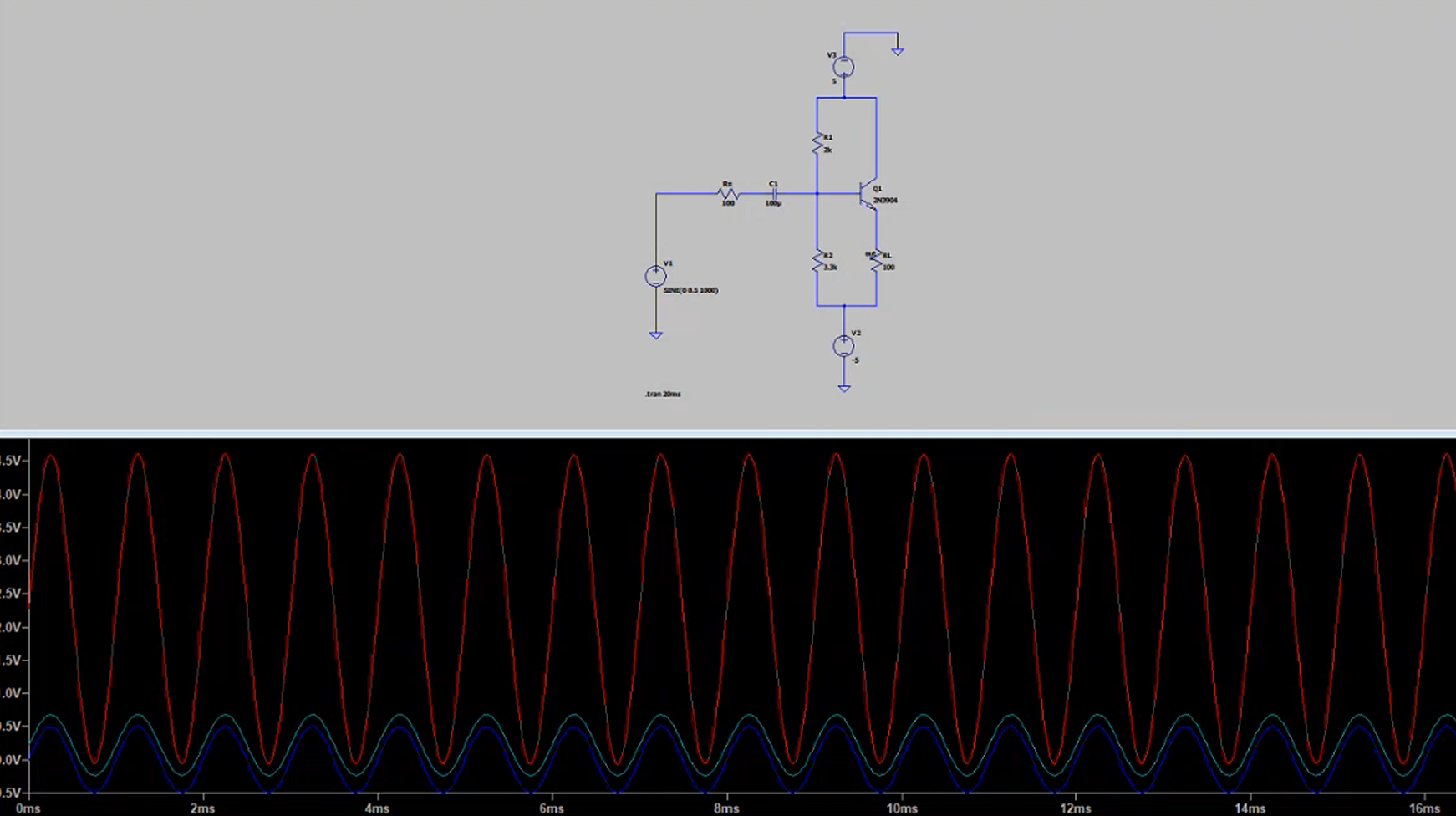
Designed, simulated, and constructed a high-linearity signal amplifier using an NPN BJT in a common-collector topology.
The amplifier handled a 100Ω load and achieved less than 10% attenuation.
The task was to amplify the current of a weak signal without changing its voltage too much, creating a unity-gain buffer for impedance matching
Validated performance through PSpice simulations and confirmed results using an oscilloscope, network analyzer, and spectrum analyzer to meet all specified criteria.
The amplifier handled signals up to about 0.5 V with clean output before distortion started to show.